

Arizona Copper Landscapes — Mineral Formation in Context
Across southern Arizona, mountain ranges expose rock shaped by long geological evolution. These landscapes reflect cycles of uplift, mineralization, weathering, and groundwater movement that redistributed copper and silica through fractures and near-surface environments. What appears today as desert terrain is the surface expression of complex processes that unfolded over extended periods of time.
Within these copper-bearing settings, secondary minerals formed as circulating fluids interacted with earlier deposits. Silica deposition occurring alongside this mineralization created conditions capable of preserving growth relationships within stone.
Copper Mineralization and Silica Preservation
Arizona’s reputation as the Copper State is rooted not only in mining history but in mineral diversity. Copper silicates, carbonates, oxides, and sulfates occur across oxidation zones, producing materials recognized for both color and scientific significance.
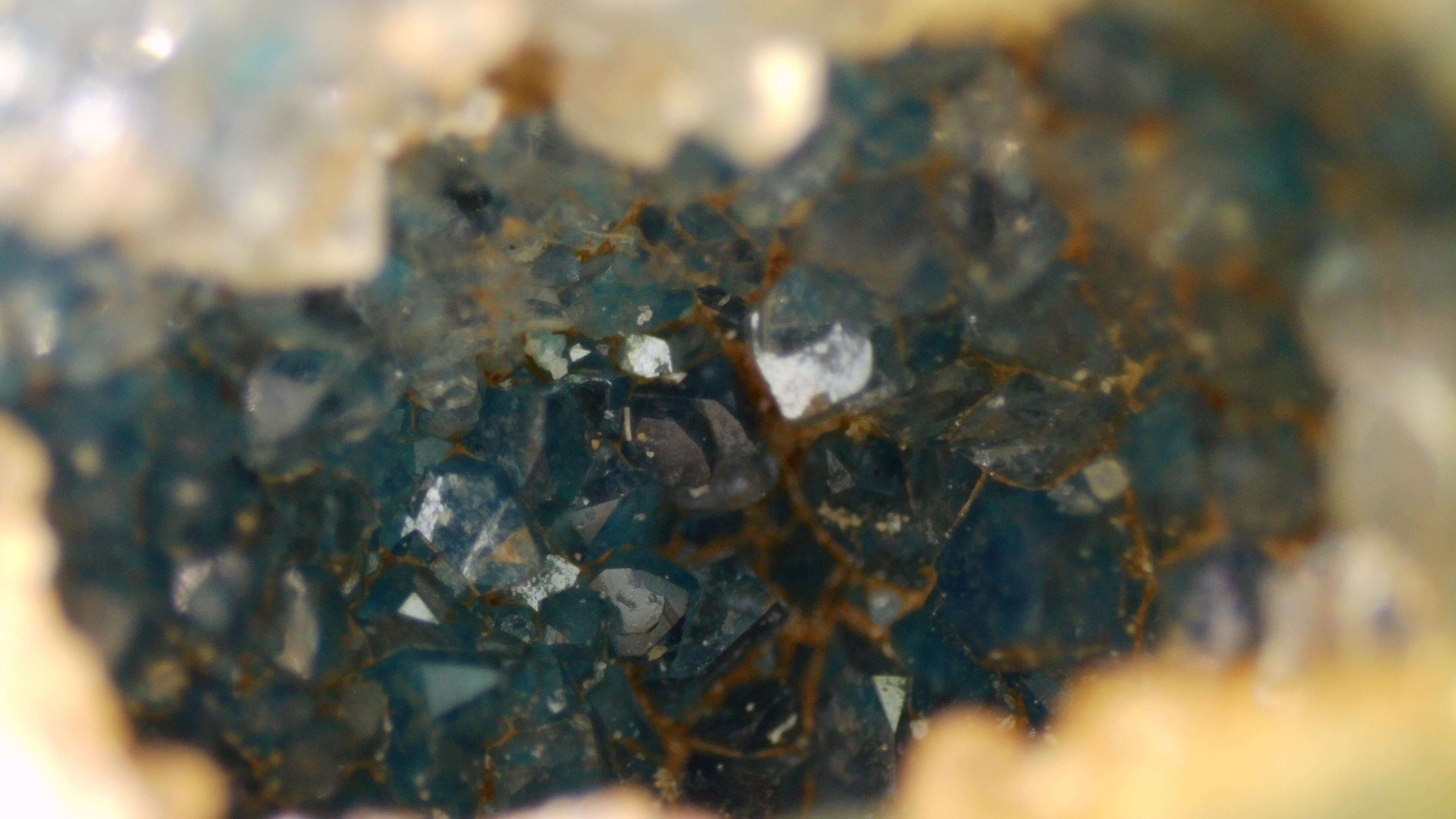
Canyonite represents one example of how these minerals may become enclosed within chalcedony. Copper-bearing phases such as papagoite, ajoite, shattuckite, and related mineralization can appear within translucent silica where deposition and mineral growth overlapped, allowing internal structures to remain visible at specimen scale.
Rather than defined by a single mineral species, the material reflects a preserved assemblage shaped by evolving chemical conditions.
Environmental Change and Mineral Expression
Near-surface environments play a central role in copper mineral formation. Groundwater movement, oxidation, and replacement processes redistribute elements, creating sequences of mineral growth that may be captured when silica continues to deposit.
In materials such as Canyonite, variations in color and texture reflect these changing conditions. Radiating structures, diffuse zones, and localized crystal surfaces illustrate how mineral growth responded to fluid chemistry rather than forming as isolated events.
The resulting specimens function as records of environmental change expressed through mineral relationships.
Landscape, Community, and Geological Heritage
Southern Arizona’s copper landscapes represent both scientific interest and cultural history. The region’s mineral diversity has shaped research, industry, and collecting traditions, connecting geology with local identity.
Materials emerging from these environments carry that broader context. Canyonite reflects not only mineral formation but the landscapes in which those processes occurred, linking specimen-scale observation to regional geological history.
Closing Perspective
Geological landscapes are cumulative — shaped by deposition, alteration, and exposure across time. Copper-bearing environments illustrate how mineral systems evolve rather than appear fully formed.
Canyonite highlights this continuity. Through preserved mineral growth within silica, it offers a visible example of how environmental change can remain recorded within finished material, connecting present observation with long-term geological process.

Written by Canyonite Laboratory